Venerable Matt Talbot's lessons on overcoming addiction
This Irishman's cure for alcoholism is both easier and harder than you might think
Jun 07, 2026
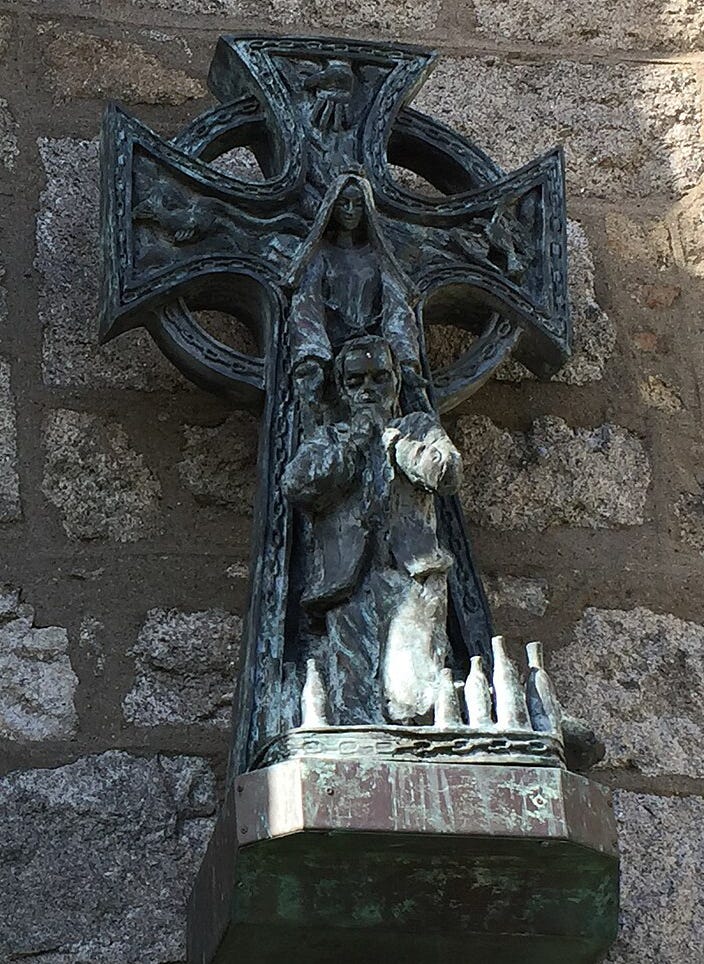
The Matt Talbot memorial at St. John the Baptist Church, Blackrock, County Dublin, Ireland
Venerable Servant of God Matthew Talbot (1856-1925) was a poor workingman in Dublin, Ireland. By the time he was twenty-eight years old, he was an alcoholic. But he overcame this bad habit, seemingly overnight, and he has become a well-known heavenly patron for those suffering from addiction, even though he has not yet been beatified.
Matt is certainly not the first Catholic to struggle with addiction. Saint Augustine of Hippo revealed that his own long-suffering mother, the future Saint Monica, had begun sneaking drinks from her father’s wine cellar when she was young. Similarly, young men like João Duarte Cidade and Rainerius Scacceri were addicted to many pleasures, including drink, before turning their lives around and becoming known as Saint John of God and Saint Rainero of Pisa, respectively.
Only God knows how many other Catholics have struggled with addiction over the centuries. Perhaps because drinking too much alcohol can lead us to do things which we later find shameful (or don’t even remember), even saints rarely talk about their worst experiences with addiction. That’s why learning from Matt Talbot’s life can be helpful for those who suffer in this way.
Of course, Matt himself was a quiet man who did not tell others about his private struggles. However, he lived only a century ago, and the testimonies of his family and friends were recorded soon after his death.
Matt was born one of twelve children. His father had an explosive temper. He was also a heavy drinker, as were many of Matt’s brothers. Like so many other Irishmen at the time, lack of education led to low-paying jobs, which led to poverty, hunger, and hopelessness. Alcohol was an escape for many Irishmen, but a deadly one that led deeper into poverty.
Matt was hardworking and honest, even as a boy. As a teenager, he began working as a messenger, but he soon began spending his earnings on drink. He was quickly addicted and in debt. On one fateful evening, when he had (once again) spent everything he had on alcohol he waited for his buddies to offer to pay for him. They didn’t.
Matt stormed home and angrily told his mother he would “take the pledge,” a popular expression used by those who made a promise before a priest to stop drinking alcohol. Although his mother was skeptical, he did go to Holy Cross College, found a priest, and pledged to stop drinking for three months. And he did it.
Forty-one years later, Matt died on a sidewalk, apparently from a heart attack, never having taken another drink. He didn’t write a book or tell his friends about how he got clean, but over the years, people managed to piece together the details of what happened.
The first lesson to be learned from Matt’s life is that he was not initially moved to repentance by a virtuous thought or a spiritual experience. He was angry, very angry that his friends—to whom he had loaned money in the past—would refuse to help him. Fortunately, because he knew of a popular practice at the time (“taking the pledge”), he knew that he could go to a nearby college and make a formal pledge to a priest to stop drinking. Today, that may not sound like a very effective way to stop an addictive habit, but it worked for him.
However, Matt did much more than make a promise to a priest.
Matt later admitted to a friend that it was very difficult for him to stop drinking, particularly at the beginning. He made some practical changes to his life, such as quitting his job at a wine merchant. The temptation working in such an environment was too great. He also took up smoking, a not uncommon substitute for alcohol, although he later broke that habit.
Encouraged by good priests—with whom he met at least weekly—Matt now began something both simple and profound: he tried to become a good Catholic. He began going to daily Mass, which for a workingman meant rising very early. He was poor, but he kept his clothes scrupulously neat and clean so that he would look respectable at church. He went to Confession once a week, every single week. He filled his evenings by going to spiritual meetings rather than pubs.
Matt hadn’t been taught to read, and he never learned to write very well. But he taught himself to read so that he could read books about his Catholic faith. Over the years and with guidance from good priests, Matt began to collect a personal library in his tiny bedroom. After his sudden death, people were astonished to discover that he owned several Bibles, many saint biographies, numerous books on prayer, and other spiritual guides and manuals. His family and friends recalled that he seemed to spend every spare moment of his life praying or reading or running—literally—to Mass.
Not only did Matt try to avoid the near occasion of sin and keep himself busy when pubs were open, he made atonement for his past sins. He scrupulously paid off all of his drinking debts. He had stolen a fiddle on one occasion to buy alcohol, and he spent a few years trying to track down that fiddler. When he could not find the man, he donated money to offer Masses for the fiddler’s soul instead.
Soon after embarking on his new life of sobriety, Matt quit his job working for a wine merchant and took a new one carrying bricks. Later he worked at a lumberyard. Although he was a short man with sloping shoulders, the other workers respected the way he uncomplainingly carried wood on those shoulders, without making excuses.
Coworkers sometimes found Matt kneeling and praying in secret between assignments. Matt did try to encourage other workers to take the pledge and give up drinking too, but in that, he was largely unsuccessful. Even though he was a recovering alcoholic, he was not critical toward those who did drink alcohol.
From his Catholic reading, Matt learned about justice from a Catholic perspective, and he recognized that the working conditions and practices in early twentieth century Ireland were often unjust. For that reason, he joined a trade union and joined his coworkers when they went on strike, not because he wanted higher pay but because he could see that their unfair rate of pay was harming the men and families around him. Near the end of his life, after he had spent many months in a hospital with declining health, he realized he could not work long hours any more and begged his boss to give him a pension. The boss refused because it was against company policy to give a pension to an unskilled laborer. When Matt’s coworkers learned about this, they showed up in their supervisor’s office and demanded that they keep Matt on the payroll until his death. The supervisor, who respected Matt, agreed.
Matt was generous with those in need, not only toward the Church and local charities, but also toward needy families and friends. Since he was a poor man, of course, his generosity was like that of the poor widow with her two small coins (Mark 12:41-41), and he generally helped others anonymously.
Perhaps the most remarkable aspect of Matt’s life was his life of physical penance. Although he worked long, hard hours at manual labor, he ate like a monk. During Lent, he was particularly rigorous, eating only two light meals per day and never eating milk, butter, or meat. His regular diet on Mondays was dry bread and black tea. Some say that he wore two chains around his body as a penance, but the evidence of that is inconclusive. Even so, he imposed many other physical penances upon himself, including sleeping on a board instead of a bed and using a block of wood as a pillow, and he spent many hours each day kneeling in prayer. Also like a monk, he kept his head down as he walked from place to place and generally spoke very little, although he would listen patiently to others—except when they took God’s name in vain.
All these details about Matt’s life certainly make him an inspirational figure to those who struggle with addiction. However, it is important that we not focus so completely on the details of his life—his physical penances, work ethic, life of virtue, reading habits, and even his sacramental life—that we overlook the most important reason that Matt conquered his alcohol addiction: God’s grace and Matt’s correspondence to that grace.
As Catholics, we are not Pelagians. We do not believe that ancient but ever-popular heresy that we can change ourselves if we just try hard enough. We can’t. We are all sinners, and we all need God’s grace.
Everything about Venerable Matt Talbot’s life reminds us that there is no magic formula to overcoming addiction. God used Matt’s anger about his friends’ stinginess to lead him away from addiction and back into the healing arms of Christ and His Church. Every day for forty years, he fought against that addiction through the power of God’s love, not through techniques or medications or easy promises. Or as Matt wrote on a piece of paper which was found in his books after his death:
O Virgin, I ask only three things: the grace of God, the Presence of God, the Blessing of God.
- Mary Purcell, Remembering Matt Talbot (Dublin: Veritas, 1954), 138.